Showing posts with label limb salvage. Show all posts

Thursday, February 12, 2015

5 Facts about Charcot Neuroarthropathy you need to know


1) With an unknown definitive mechanism of incidence, this disease process has many proposed hypothetical mechanisms currently in clinical practice. Some believe that increased inflammation and microfracturing of the bone secondary to sensory loss are key components, others believe glucose levels and specific traumatic events are responsible for this process which are compounded by inability to offload and protect the injured limb leading to progressive breakdown of the bone. We all agree that these elements are part of the problem, but do not necessarily occur in all cases. Especially in non diabetics with the disease of Charcot neuroarthropathy.

2) We know that many cases start with increased warmth, redness, and swelling. Unfortunately not ALL cases give us this "textbook" presentation.

3) We also know that characteristic radiographic changes may occur.  And when they do, differing mindsets and clinical approachs are valid and are practiced routinely in my practice. If an ulceration is present, or progressive radiographic changes are found, surgery is likely required for limb salvage.

4) We generally understand that patients with low or no protective sensory threshold on their feet tend to have a higher incidence of this process.  Also patients that have poor glucose control and are obese tend to have this same increase in incidence. Edema and general leg swelling in diabetic patients with Hemoglobin A1c levels higher than 8.0 tend to have increased risk of Charcot development in their feet. Usually all of these patients have good blood flow with regards to arterial circulation, but may have venous or lymphatic flow compromise.
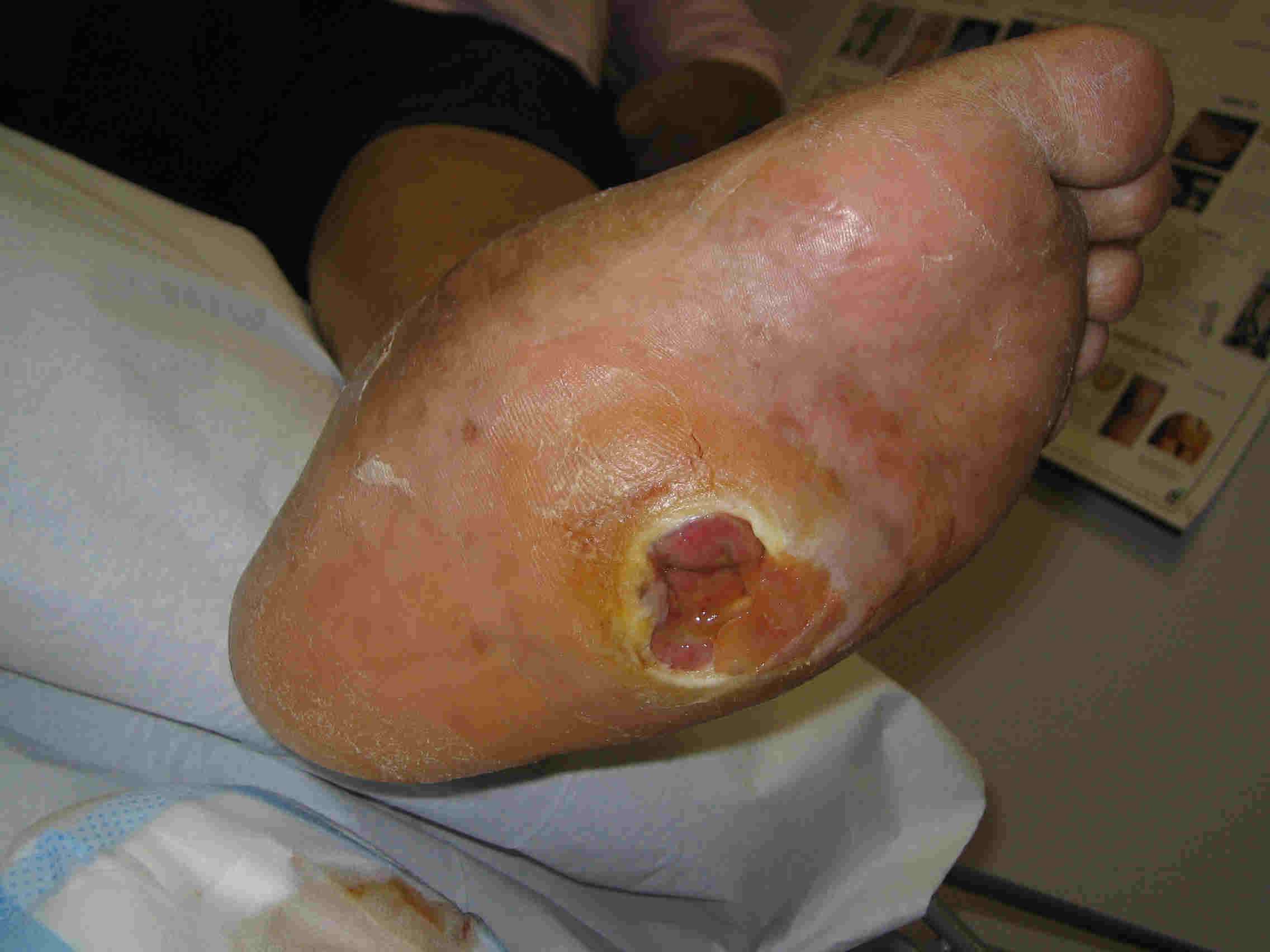


5) Not all patients with Charcot neuroarthropathy are diabetic. I have treated many patients whom are not diagnosed with diabetes, and did not present with red swollen foot, who developed Charcot neuroarthopathy with radiographic bone degradation and resultant foot deformity. These patients do tend to have profound sensory polyneuropathy of unknown etiology (idiopathic) and are still at risk given the above listed requirements. I have had to reconstruct several patient's feet without diabetes as an underlying diagnosis, and it seems that they tend to have less overall complications but are still prone to the neuroarthropathy nonetheless.


The take away from this blog is that many of the "facts" about this disease process have some "grey area" information. You should seek the expert opinion with good experience in this disease process prior to any surgical intervention or decision for lower leg or foot amputation. The doctors at FFLC are well equipped to accommodate and treat this condition and are well versed in all avenues regarding limb salvage.

Thursday, October 30, 2014

Diabetics who smoke cigarettes beware


Smoking releases a molecule known as norepinephrine, which triggers blood vessels to constrict, or narrow. When the already small vessels in the foot constrict, oxygen and the cells that fight infection and aid in healing are unable to reach tissues. Each cigarette smoked has been shown to cause oxygen levels to fall and remain low for 30 to 50 minutes. This is of great concern in those with a foot wound or incision after surgery, in which blood flow and oxygen are vital to skin healing.    
Each cigarette contains more than 4,000 natural and synthetic chemicals. Some of these chemicals include carbon monoxide, methanol (which is found in rocket fuel), ammonia, and nicotine.  Nicotine has been shown to decrease the molecules that are responsible for growth of new blood vessels and development of osteoblasts, or bone building cells. Carbon monoxide further contributes to the decrease in tissue oxygen caused by vessel constriction, by taking oxygen away from the molecule it is normally transported in in the blood. It is for these reasons that quitting smoking is imperative for individuals with foot problems. Studies have shown that there is a 2.7 times higher risk of bone not healing in smokers compared to non-smokers undergoing foot surgery.  

Prior to foot surgery involving bone, smoking should be stopped at least 6 weeks prior to the procedure if possible and then take that opportunity to stop smoking indefinitely


In individuals with diabetes or other disorders affecting their blood vessels, smoking is even more dangerous.  Pressure ulcers develop when sensation is diminished and the normal feeling of pain associated with a wound is not present. Tissue healing is impaired and there is a heightened risk of infection developing. Combined with smoking, such risks are furthered increased. Individuals with diabetes who notice a foot wound, whether they are smokers or not, should contact their podiatrist immediately. Early treatment can prevent infection and worsening of the wound that can potentially lead to a need for amputation.  Bill’s story in the smoking ad is a scary one, but by sharing it he may be able to prevent others from suffering a similar fate of amputation. 


Monday, September 8, 2014

Limb Preservation: Total Contact Casting


Diabetics with neuropathic ulcers affect at least one quarter of all diabetics in the United States, and according to Wounds Research, approximately 1 in 5 of these individuals will eventually require an amputation of their foot. Total contact casting has recently become more popular as an option for foot protection, and to mediate the excessive wear and tear that some diabetic foot sores suffer.

What is total contact casting?

As the name suggests, this technique, which is used by many diabetic foot specialists, is a thin cast that is applied to the entire plantar surface area of the foot, as well as the lower leg. Based on its design, the cast can take up as much at 92 percent of the pressure from the ulcer site. Since ulcers often occur on parts of the foot or leg that are repeatedly impacted through daily movement, it is important that they receive as much padding as possible without affecting an individual’s normal walking patterns. Although total contact casting provides relief from certain pressures, the cast works with the natural human gait to make sure that no section of the foot or leg is required to take on excessive weight or pressure.

Does it always work?

Total contact casting has been shown to be effective in the healing of foot and lower leg ulcers, but only those that are noninfected. According to current research, the success rate is between 72 and 100 percent in most patients. A study conducted at the University Hospital Maastricht in the Netherlands examined how total contact casts would fare on infected patients, and of the 28 patients in the study group, only 36 percent showed signs of healing. The study group recommended that individuals with infected diabetic ulcers look toward alternative treatments for healing, according to the American Diabetes Association.

Surgery may become necessary in conjunction with acute infections.


Wednesday, April 2, 2014

Myths about wound care


1) Wound Care Centers are the gold standard for healing all wounds.

All too often we see a wound such as the one pictured above, and as a second or third opinion we need to manage this patient because the wound is not healing. Wound care centers are usually very good at treating superficial wounds, but in the foot and especially in the area of the digits, we find that even a "small superficial dry ulceration of the hallux" can be a surgical emergency because of the proximity of bone and tendon in this area and are often not treated entirely well in a wound care center which is filled with nonsurgical wound care doctors. 

2) Diabetics don't heal well.

This is not always the case in a patient who has a dopplar examination of the lower extremities, and is found to not have any significant vascular disease. If you are eating 3 meals a day, and are not on dialysis chances are you have healing potential and just need better offloading, aggressive surgical debridement, and possibly a localized bone debridement or tendon procedure. We often team up with vascular surgeons, infectious disease doctors, and endocrinology doctors to help achieve optimal conditions to prevent amputations. 

If your foot and ankle wounds are not improved after 4 weeks of care, you need to see a wound care specialist board certified in foot and ankle surgery.


Brian Timm, DPM, FACFAS